
Key Takeaways
- Active shooter situations can change quickly. Continually assess the threat and adapt your response as new information becomes available.
- Lockdown is one response option, not the only one. Depending on the situation, evacuation, enhanced lockdown, or other trained response options may be safer.
- Active shooter response training builds decision-making skills. Ongoing, options-based practice gives people a framework to draw from when they need to act quickly.
Eight minutes passed between Dr. Allison Willemin’s first 911 call and the call confirming the immediate threat had ended.
“I feel like I lived an entire life through there,” she said.
In those eight minutes, the information kept changing. A vehicle hitting the building became gunfire. The active assailant then set a fire in the chapel which created another threat. Each detail required a different decision.
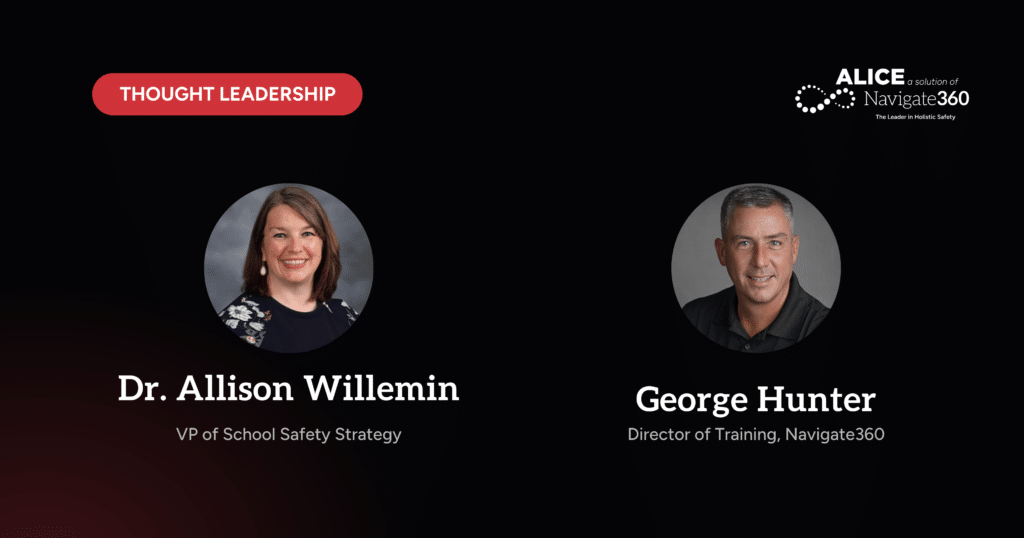
During a recent conversation with George Hunter, Director of Training at Navigate360, Dr. Willemin drew on her lived experience to reinforce a central lesson: The safest decision in one moment may change moments later.
The First Decision: What Is Happening Right Now?
For Dr. Willemin, the first alert was the sound of a vehicle striking the wall of her church. Believing someone might need medical assistance, she moved toward it. Then she heard gunshots, and her understanding of the situation changed immediately.
Her next move depended on the information she could gather in real time: Where was the danger? Was there a clear route out? Would getting into a vehicle leave her more exposed? Where could she create the greatest distance from the threat?
She initially considered leaving by car. But as the gunfire sounded closer, that route no longer seemed safe. Remembering the woods and creek behind the property, she chose that way out instead.
“It was knowing that I had to keep myself in the moment and not get distracted,” she said.
When Lockdown Is Not Enough, What Comes Next?
Lockdown can be effective when evacuation is unsafe, and a space can be secured. But it cannot be the only response option people know.
During the incident, Dr. Willemin experienced both gunfire and a fire that threatened those inside. While some rooms offered a few ways to lock or barricade the doors, the fire would have made it difficult or unsafe to go into lockdown. She then considered one evacuation route, recognized that the danger appeared to be moving closer, and chose another way to create distance.
As she continued to make her way to safety, Dr. Willemin did not remain committed to her first decision simply because it was the course she was on in that moment. She continued to assess and adapt based on the information available to her.
“This isn’t an instance where locking down alone would have worked,” Dr. Willemin said. “Ensuring that there’s an options-based response really helped in the end.”
Hunter saw the connection between her preparation and her decisions: “As the danger was real for Allison, she reacted and performed to the level of her training.”
What Response Options Can Help You Survive?
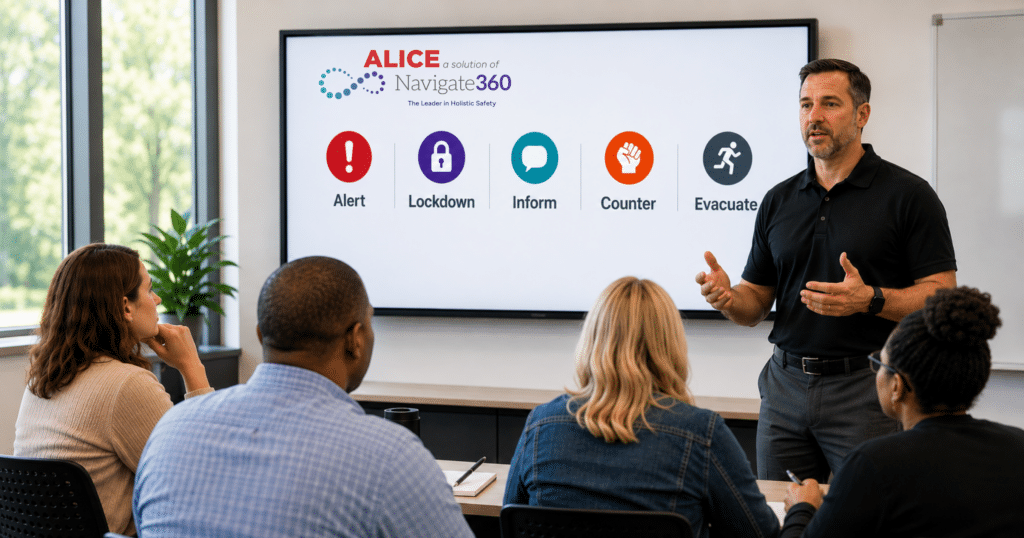
ALICE Training® provides five nonsequential response options: Alert, Lockdown, Inform, Counter, and Evacuate. The goal is not to follow them in a p sequential order. It is to use real-time information to choose the safest response available.
If evacuation is possible, create distance between you and the threat, leave your belongings behind, and call 911 once you are safe.
When law enforcement arrives, remain calm, follow instructions, and keep your hands visible.
If you cannot evacuate safely, use Enhanced Lockdown to lock and barricade the entrance, spread out, silence phones, and continue assessing the situation. This goes beyond simply finding a place to hide and wait.
If an attacker enters your space and your life is in imminent danger, Counter may create a survival advantage through noise, movement, and distraction, including throwing items. Counter is not synonymous with fighting and is used only when safer options are unavailable.
The critical difference is choice. Most people never receive training to respond to a violent critical incident, or they default to hiding. ALICE’s multi-option approach empowers people to respond to the conditions they are facing, taking part in their own survival.
The Power to Change Course
When the gunfire sounded closer, Dr. Willemin realized that leaving by car was no longer a safe option. She reassessed the information she had and chose another route away from the threat.
That ability to adapt became critical. Her previous decision did not lock her into one response as the danger changed. She remained aware of her surroundings, stayed focused, and kept moving.
“It was knowing that I had to keep myself in the moment and not get distracted,” she said. “I told myself, this is everything you’ve trained for.”
Training Gives People Something to Draw From
Training cannot predict someone’s response to trauma, but it can provide practiced options when there is little time to decide.
Dr. Willemin described how that preparation surfaced in the moment. As she worked to remain focused and assess what was happening, she recalled telling herself, “Feel your feelings later. This is everything you’ve trained for.”
Her training did not eliminate the stress of the situation. It gave her a familiar framework for working through it.
“It was knowing that I had to keep myself in the moment and not get distracted,” she said.
That readiness was not built through a single lesson. “It isn’t a one and done,” Dr. Willemin emphasized. Effective active shooter response training requires ongoing discussion and practice that reinforce decision-making over time. It must also be trauma-informed, age-appropriate, and ability-appropriate, building confidence without relying on fear.
For Dr. Willemin, sharing her experience is now part of helping others build that readiness before they face a critical moment of their own.
“I want to help as many people as I can on a wider scale,” she said. Her mission is to “teach and empower people to make decisions that will, as best we can, allow everyone to go home at the end of each day.”
When the Moment Came, They Were Ready
When an armed individual entered Real Life Ministries on Christmas Eve, its congregation had something to draw from: ALICE Training® completed years earlier.
Download the free case study to see how proactive preparation helped turn uncertainty into decisive action.
“In the twenty three years I have been a Police Officer, I have received close to 100 certificates. The ALICE Training I received from you is one of the best courses of instruction I have ever taken.”
About ALICE Training®
For over 20 years, ALICE Active Shooter Response Training has led the way in empowering schools, workplaces, and communities with proactive response strategies to improve safety and save lives.

The ALICE Training® Editorial Team
The ALICE Training® Editorial Team is a passionate group of professionals dedicated to sharing accurate, actionable, and forward‑thinking guidance on active shooter response and overall safety preparedness. Our team draws on diverse expertise in education, law enforcement, emergency management, and technology, giving us a well‑rounded perspective on the challenges schools, workplaces, and communities face every day.
With extensive firsthand experience in implementing the ALICE strategies, conducting safety drills, and integrating proven response protocols, our writers bring practical insight to every piece of content. We collaborate with leading safety experts and trainers to deliver reliable, easy‑to‑understand information that empowers you to build safer, more prepared environments.
Related Posts
-

School Safety Strategies for Catholic Schools
Explore Catholic school safety strategies that strengthen emergency preparedness, improve response training, and build a culture of readiness.
Read More
-
Does ALICE Training® Work? What the Research Says
Does ALICE Training work? See what peer-reviewed research reveals about survival rates, response times, and trauma-informed active shooter training.
Read More
-

Safety Training for Colleges: Preparing Campuses for the First Critical Minutes
Discover key strategies for implementing safety training for colleges to enhance emergency readiness and protect the campus community.
Read More


Discover the Freedom of Empowerment
Prepare your people for the worst case scenario with the best possible training. Reach out today for a quote on in-person training sessions, eLearning options or a blend of the two – and discover the freedom of knowing you’ve done everything you could to prevent tragedy.