

Key Takeaways
- A trauma-informed response improves safety by addressing the impact of trauma and supporting both physical and emotional well-being.
- A trauma-informed approach requires leaders to recognize the signs of trauma and apply that understanding in training, policies, and communication.
- Trauma-informed safety training helps reduce re-traumatization, build resilience, and strengthen overall safety culture.
Why a Trauma-Informed Response Matters
Creating a safe and supportive environment, whether in schools, workplaces, healthcare settings, or houses of worship, requires more than just physical measures. It involves understanding and addressing the effects of trauma on individuals. Traditional lockdown-only safety practices are evolving to integrate options-based, trauma-informed responses that prioritize both physical and emotional well-being.
A trauma-informed approach reduces the risk of re-traumatization while ensuring participants are trained effectively.
Understanding Trauma & Its Impact
Defining Trauma
Trauma results from emotionally harmful experiences such as violence, abuse, neglect, or loss, which can have a long-term impact on anyone regardless of background or status. These events often lead to traumatic stress, affecting mental and physical health.
According to the Substance Abuse and Mental Health Services Administration (SAMHSA), trauma can cause behavioral challenges, coping difficulties, and learning obstacles across environments from education to health care.
The Prevalence of Trauma & Its Relevance in Safety Training
Statistics show that 70% of adults in the U.S. have experienced at least one traumatic event. This underscores the importance of integrating knowledge about trauma into safety training across schools, workplaces, and community settings.
Without a trauma-informed response, training designed to prepare individuals for emergencies can unintentionally trigger stress, anxiety, or trauma responses.
What is a Trauma-Informed Response?
A trauma-informed response is a structured approach to safety training that recognizes the impact of trauma, understands how it affects behavior, and applies principles of trauma-informed care to create safer, more supportive environments for everyone.
This approach focuses on:
- Understanding the effects of trauma
- Recognizing how individuals respond to stress
- Integrating knowledge about trauma into policies and training
- Avoiding re-traumatization during safety practices
The Case for Trauma-Informed Safety Training
Implementing a trauma-informed approach in safety training ensures that practices respect the needs of all individuals. This method helps create an environment where both physical and emotional safety is prioritized, ultimately supporting a positive safety culture.
Key Elements of a Trauma-Informed Response
1. Realize
Organizations must realize the impact of trauma on individuals’ well-being. This includes understanding how trauma affects behavior, health, and performance across settings.
2. Recognize
Leaders should be able to recognize the signs and symptoms of trauma. Indicators like increased aggression, absenteeism, or social withdrawal can signal a history of trauma. This awareness helps leaders respond in a way that fosters both physical and emotional safety.
3. Respond
A trauma-informed response incorporates evidence-based practices into policies and training. Using clear communication, supportive language, and well-thought-out safety protocols helps build trust and create an environment that prioritizes safety.
4. Resist Re-Traumatization
To avoid re-traumatization, it’s crucial to conduct safety drills in a way that minimizes stress. For example, unannounced or highly dramatized drills can trigger traumatic responses in employees, staff, students, or any other participants.
Trauma-Informed Practices in Safety Drills
- Announce Drills in Advance: Announcing drills helps reduce unnecessary anxiety and prepares individuals mentally. This practice supports a trauma-informed response by ensuring that participants feel secure during training.
- Limit Dramatization: Safety training should be informative without overwhelming participants. Reducing dramatization, such as omitting weapons or loud alarms, helps maintain a balanced approach that educates without distressing participants.
- Offer a Post-Drill Debrief: Post-drill discussions allow individuals to process their experience in a supportive environment. These debriefs are essential for reinforcing learning and mitigating any emotional impact, aligning with principles of trauma-informed care.
- Incorporate Calming Strategies: Training leaders in trauma-aware calming strategies can help create a supportive environment during safety drills. Leaders who model calm behavior can guide participants through training, fostering a sense of security and control.
- Provide Alternative Training Options: Offering alternative, lower-stress training methods can be beneficial for those who find in-person drills too distressing. This flexibility is part of a trauma-informed response that accommodates individual needs and promotes comprehensive learning.
ALICE Training® – A Trauma-Informed Multi-Option Response Program
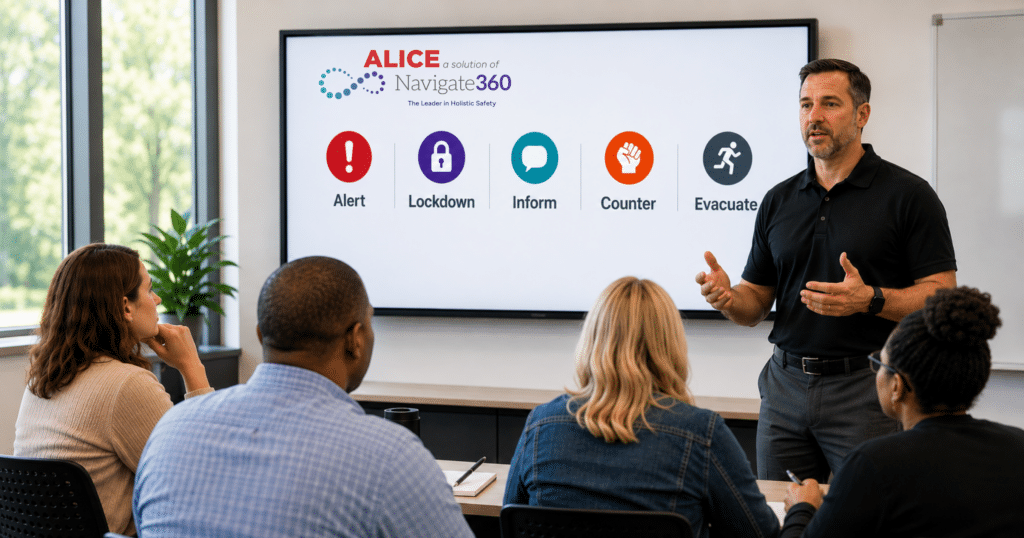
ALICE Training®, a Navigate360 solution, is a leader in active threat response training, providing an options-based approach designed to meet both physical and emotional safety needs. The ALICE method (Alert, Lockdown, Inform, Counter, Evacuate) empowers employees with choices based on the specific scenario, reducing anxiety and building confidence.
Trauma-Informed Elements of ALICE Training®
- Blended Learning Options: ALICE includes various formats to meet the needs of employees with different comfort levels and backgrounds.
- Building Confidence: The training provides employees with tools to respond proactively, supporting their safety while minimizing stress.
- Supportive Practices: ALICE incorporates trauma-informed care, ensuring that training respects employees’ cognitive and emotional needs.
You Can’t Avoid the Hard Conversations
But you can prepare for them the right way.
See how Oxford Academy used a trauma-informed approach to train for reality—without causing harm—and how it changed everything.

“In the twenty three years I have been a Police Officer, I have received close to 100 certificates. The ALICE Training I received from you is one of the best courses of instruction I have ever taken.”
About ALICE Training®
For over 20 years, ALICE Active Shooter Response Training has led the way in empowering schools, workplaces, and communities with proactive response strategies to improve safety and save lives.

The ALICE Training® Editorial Team
The ALICE Training® Editorial Team is a passionate group of professionals dedicated to sharing accurate, actionable, and forward‑thinking guidance on active shooter response and overall safety preparedness. Our team draws on diverse expertise in education, law enforcement, emergency management, and technology, giving us a well‑rounded perspective on the challenges schools, workplaces, and communities face every day.
With extensive firsthand experience in implementing the ALICE strategies, conducting safety drills, and integrating proven response protocols, our writers bring practical insight to every piece of content. We collaborate with leading safety experts and trainers to deliver reliable, easy‑to‑understand information that empowers you to build safer, more prepared environments.
Related Posts
-


The Safe Option Can Change in Seconds: What to Do in an Active Shooter Situation
Learn what to do in an active shooter situation, why the safest response can change quickly, and how options-based training helps people assess and adapt.
Read More
-
School Safety Strategies for Catholic Schools
Explore Catholic school safety strategies that strengthen emergency preparedness, improve response training, and build a culture of readiness.
Read More
-
Does ALICE Training® Work? What the Research Says
Does ALICE Training work? See what peer-reviewed research reveals about survival rates, response times, and trauma-informed active shooter training.
Read More


Discover the Freedom of Empowerment
Prepare your people for the worst case scenario with the best possible training. Reach out today for a quote on in-person training sessions, eLearning options or a blend of the two – and discover the freedom of knowing you’ve done everything you could to prevent tragedy.