
Every School Needs a Plan — Not Just a List
Every day, schools face a wide range of safety concerns — from active shooter threats to student mental health crises and evolving risks that challenge even the most prepared districts. In this environment, a school safety checklist is an important first step. It outlines the protocols, resources, and responsibilities needed to respond effectively when every second counts.
But a checklist alone isn’t enough. Real safety depends on how well staff and students are prepared to use those plans in real-world situations. That’s where ALICE Training® comes in. As the original, options-based active shooter response program, ALICE equips school communities with the confidence and skills to move beyond compliance and act decisively in a crisis.
What Is a School Safety Checklist — and Why Does It Matter?
At its core, a school safety checklist is a planning tool designed to guide schools through prevention, response, and recovery. It ensures that critical safety steps are documented, practiced, and easy to follow.
For many districts, a checklist is seen as a compliance requirement — something provided by state agencies or .gov resources. While these templates are valuable starting points, they’re often too generic. True preparedness requires more than a form: it requires tailored solutions, real training, and a culture of readiness.
A well-designed checklist paired with training can help schools:
- Respond faster and more effectively in emergencies
- Reduce liability and confusion during critical incidents
- Build confidence among staff, students, and families
The ALICE Framework for School Safety Readiness
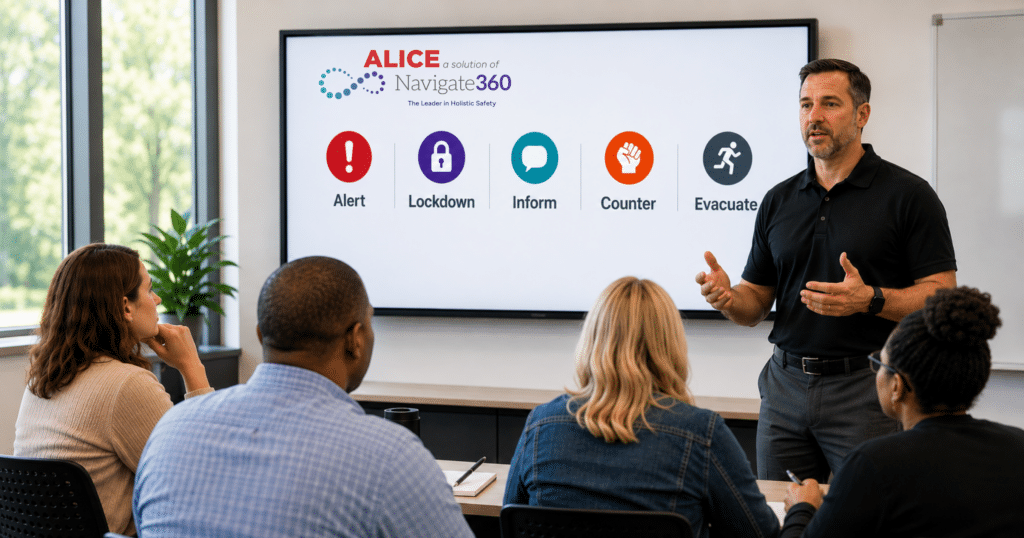
ALICE Training® prepares schools to respond to violent critical incidents using a proactive, options-based approach. Each principle ties directly to items that should appear on every school safety checklist.
Alert: Recognize the Threat Early
Early recognition saves lives. Staff must be trained to spot concerning behaviors, know the reporting process, and act quickly. Clear communication systems — with consistent language across all buildings — are vital.
Checklist connection: Does your safety plan and training include clear alert protocols and early threat recognition training?
Lockdown: Secure Your Space if Evacuation Isn’t an Option
Traditional lockdowns often leave people vulnerable. ALICE trains individuals to secure their space using barricades and situational awareness, creating real protection when evacuation isn’t possible
Checklist connection: Do you train staff and students to go beyond passive lockdowns and take active protective measures?
Inform: Share Real-Time Information to Empower Action
Accurate, real-time communication empowers individuals to make the safest decisions. Plans should outline who communicates, what tools are used, and how information is shared during an incident.
Checklist connection: Does your safety plan include protocols for real-time information sharing during a crisis?
Counter: A Last Resort Option
Counter is not fighting. It involves age-appropriate disruption tactics to distract and create opportunities to escape when no other options remain. This training reduces fear and builds confidence.
Checklist connection: Are your staff trained in age-appropriate counter strategies as a last-resort option?
Evacuate: Prioritize Getting Away From Danger
Evacuation is often the best response, yet many plans overlook it. Schools must identify multiple evacuation routes and plan for reunification once students and staff are safe.
Checklist connection: Do your plans emphasize evacuation as a priority and provide alternate routes for safe escape?
Checklist Areas That Support the ALICE Approach
A strong school safety checklist also includes broader planning areas that reinforce the ALICE framework:
Training & Drills
- All staff and students should take part in regular, age-appropriate drills.
- Substitutes and support staff must also be included.
- Drills should reflect ALICE concepts — not passive lockdown-only responses.
Classroom Setup & Readiness
- Classrooms should support visibility and accessibility to exits.
- Staff should know how to quickly barricade doors and identify escape options.
Explore more in 7 Tips for Setting Up Your Classroom to Support ALICE Concepts.
By implementing proactive safety measures, teachers empower students to take ownership of their surroundings and act responsibly.
Reunification Planning
- Families and students need a safe way to reconnect after a crisis.
- Plans should outline reunification procedures in advance.
- Tools like Navigate360’s Emergency Management platform help with reunification planning, drill tracking, and documentation.
Behavioral Threat Assessment Teams
- Prevention is the first line of defense.
- Teams should be trained to identify, monitor, and intervene before violence occurs.
- ALICE Training® works hand-in-hand with broader Navigate360 solutions to support early intervention.
How to Use This Checklist
A checklist is only effective when it’s reviewed, practiced, and owned by the entire school community. To put your plan into action:
- Form a safety committee to review each category regularly.
- Conduct realistic drills to test your protocols.
- Update your checklist as new threats and technologies emerge.
- Pair documentation with training — because plans don’t work if people aren’t prepared.
From Checklist to Confidence
A school safety checklist provides structure, but true readiness comes from empowering people with the knowledge and confidence to act. ALICE Training® equips schools with the tools, skills, and mindset needed to save lives when it matters most.
Preparedness isn’t about checking boxes — it’s about building a culture of safety and giving staff and students the confidence to respond. With ALICE, schools move beyond compliance and create safer environments where learning can thrive.
Ready to Build a Safer Culture?
Start with ALICE Training®. Whether you’re leading a school, business, healthcare facility, or faith-based organization, we’ll help you prepare, protect, and empower. See what others are saying about ALICE Training®.
“In the twenty three years I have been a Police Officer, I have received close to 100 certificates. The ALICE Training I received from you is one of the best courses of instruction I have ever taken.”
About ALICE Training®
For over 20 years, ALICE Active Shooter Response Training has led the way in empowering schools, workplaces, and communities with proactive response strategies to improve safety and save lives.

The ALICE Training® Editorial Team
The ALICE Training® Editorial Team is a passionate group of professionals dedicated to sharing accurate, actionable, and forward‑thinking guidance on active shooter response and overall safety preparedness. Our team draws on diverse expertise in education, law enforcement, emergency management, and technology, giving us a well‑rounded perspective on the challenges schools, workplaces, and communities face every day.
With extensive firsthand experience in implementing the ALICE strategies, conducting safety drills, and integrating proven response protocols, our writers bring practical insight to every piece of content. We collaborate with leading safety experts and trainers to deliver reliable, easy‑to‑understand information that empowers you to build safer, more prepared environments.
Related Posts
-

The Safe Option Can Change in Seconds: What to Do in an Active Shooter Situation
Learn what to do in an active shooter situation, why the safest response can change quickly, and how options-based training helps people assess and adapt.
Read More
-
School Safety Strategies for Catholic Schools
Explore Catholic school safety strategies that strengthen emergency preparedness, improve response training, and build a culture of readiness.
Read More
-
Does ALICE Training® Work? What the Research Says
Does ALICE Training work? See what peer-reviewed research reveals about survival rates, response times, and trauma-informed active shooter training.
Read More


Discover the Freedom of Empowerment
Prepare your people for the worst case scenario with the best possible training. Reach out today for a quote on in-person training sessions, eLearning options or a blend of the two – and discover the freedom of knowing you’ve done everything you could to prevent tragedy.